
Last time I checked in I had just had my first rejection after pitching. Later that day, I had a request for the full manuscript. The following week I had another request for the full manuscript. So now I’m in the waiting limbo that is ‘on submission’. Some people like to send their work to every publisher they can, all at once. I’m still easing myself into the idea, and so am patiently (well…) waiting for a response before I make my next move.
In the meantime, I’m throwing myself into the new project. When I say that, I mean research. I’m yet to write a single word of manuscript. I am, however, slowly unearthing my characters, and the storyline.
Having only written memoir previously, I had no idea whether I was a plotter or a pantser. I’d never written fiction of any description. It turns out. I’m a plotter. I have a plot. It’s sparse, but it has a start, a middle, and an end. It excites me when I think about it. The characters are becoming more and more three dimensional and complex. It’s slowly becoming a ‘work in progress’ rather than an idea.
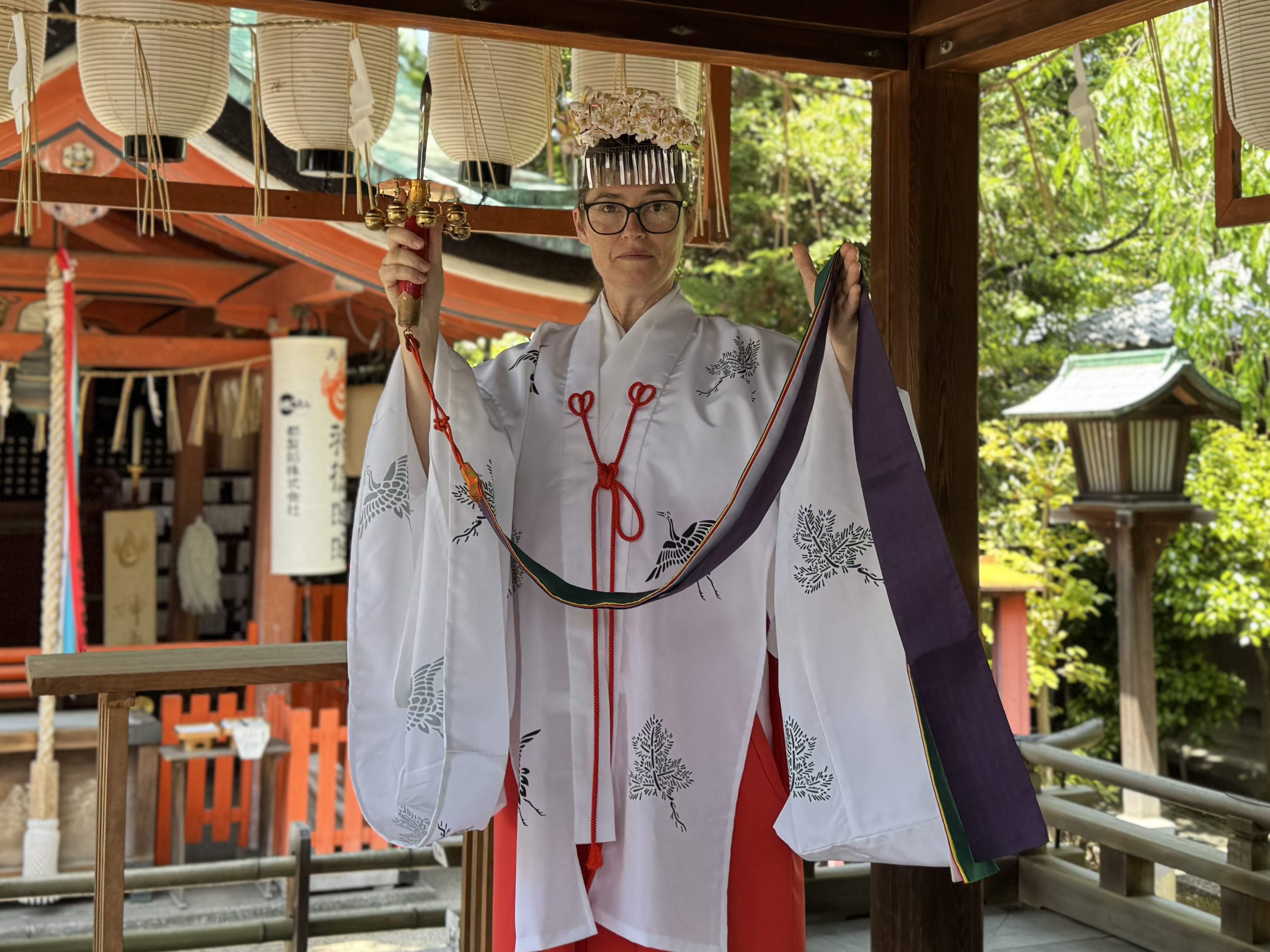
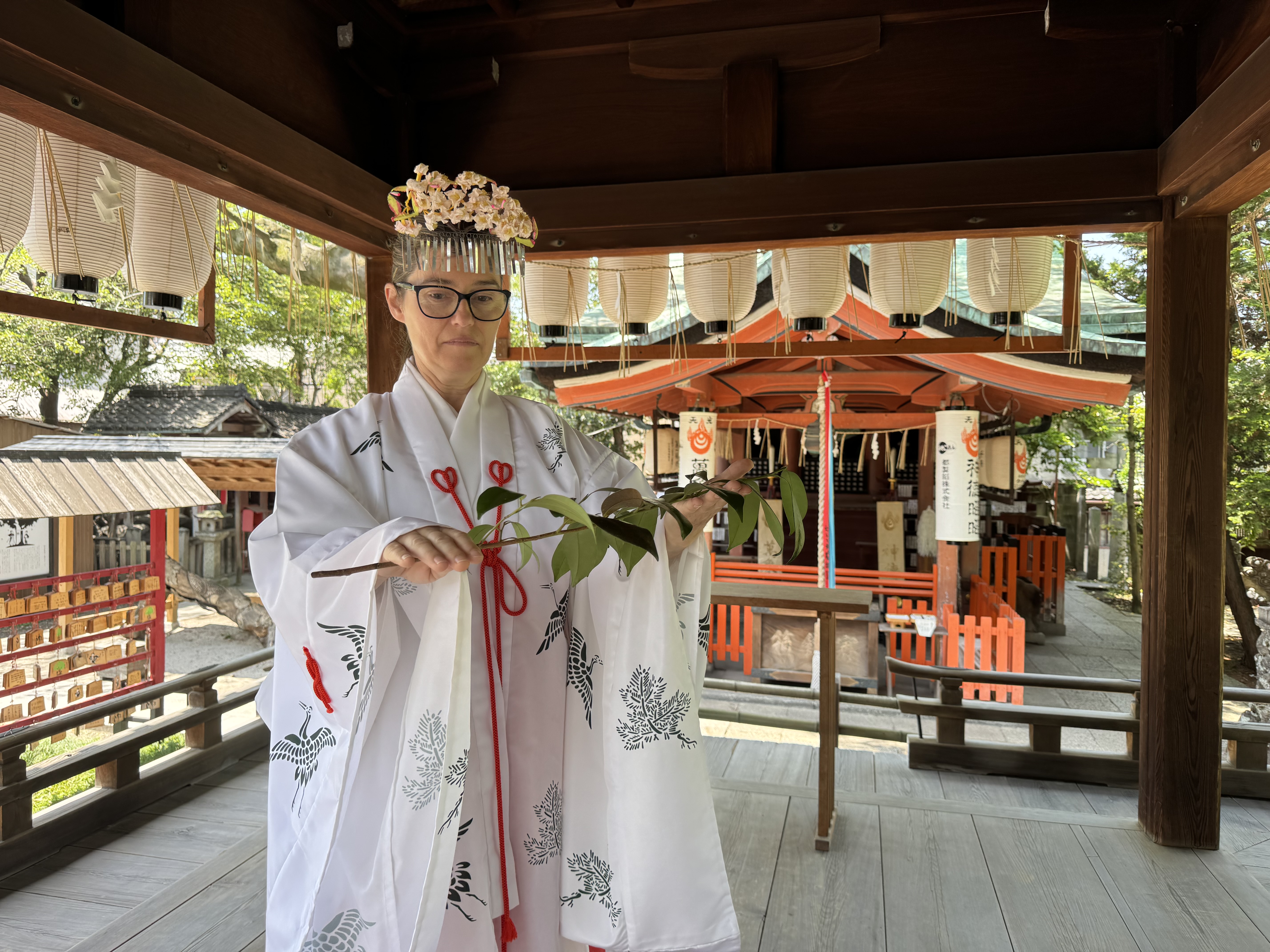
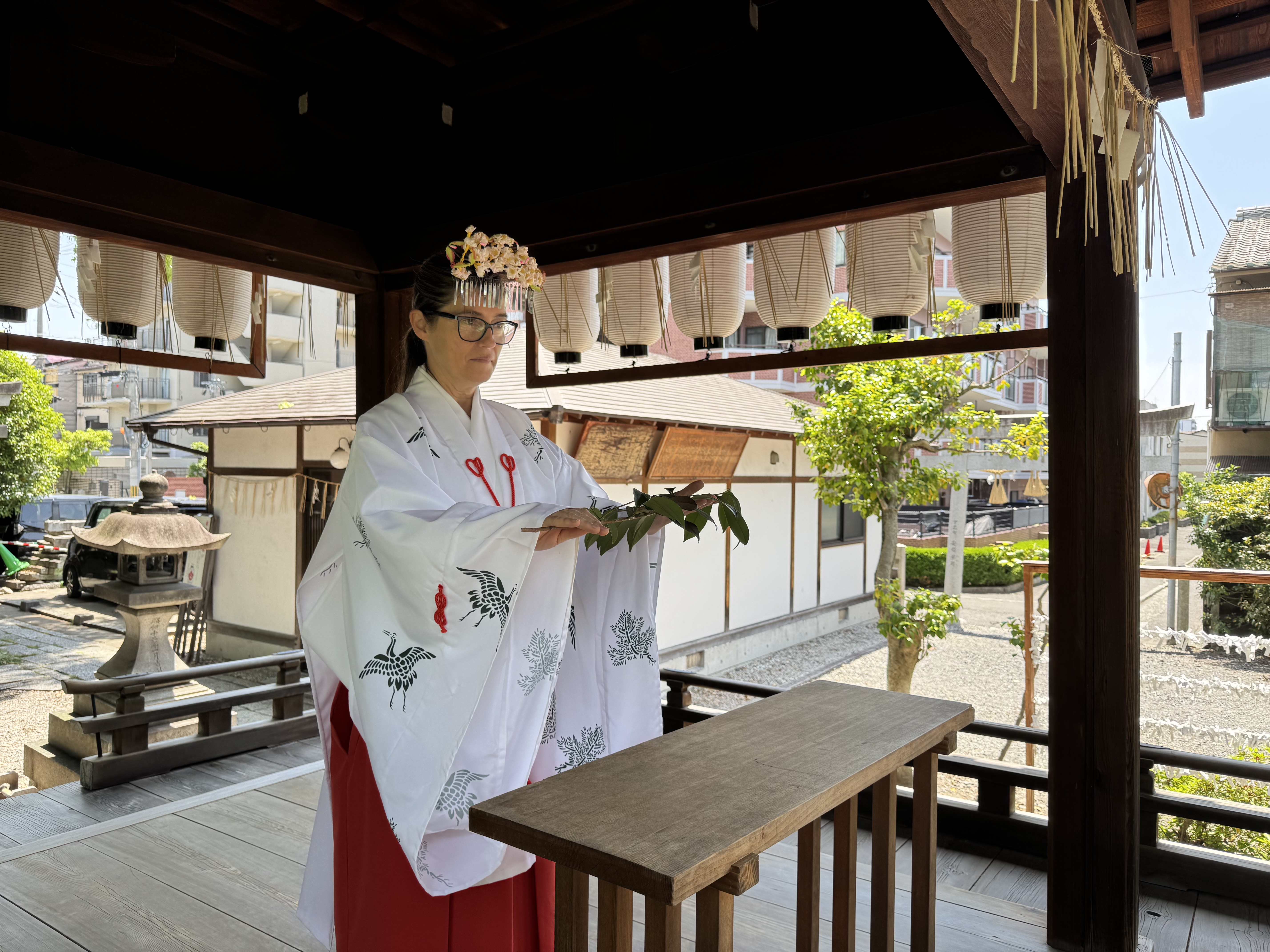
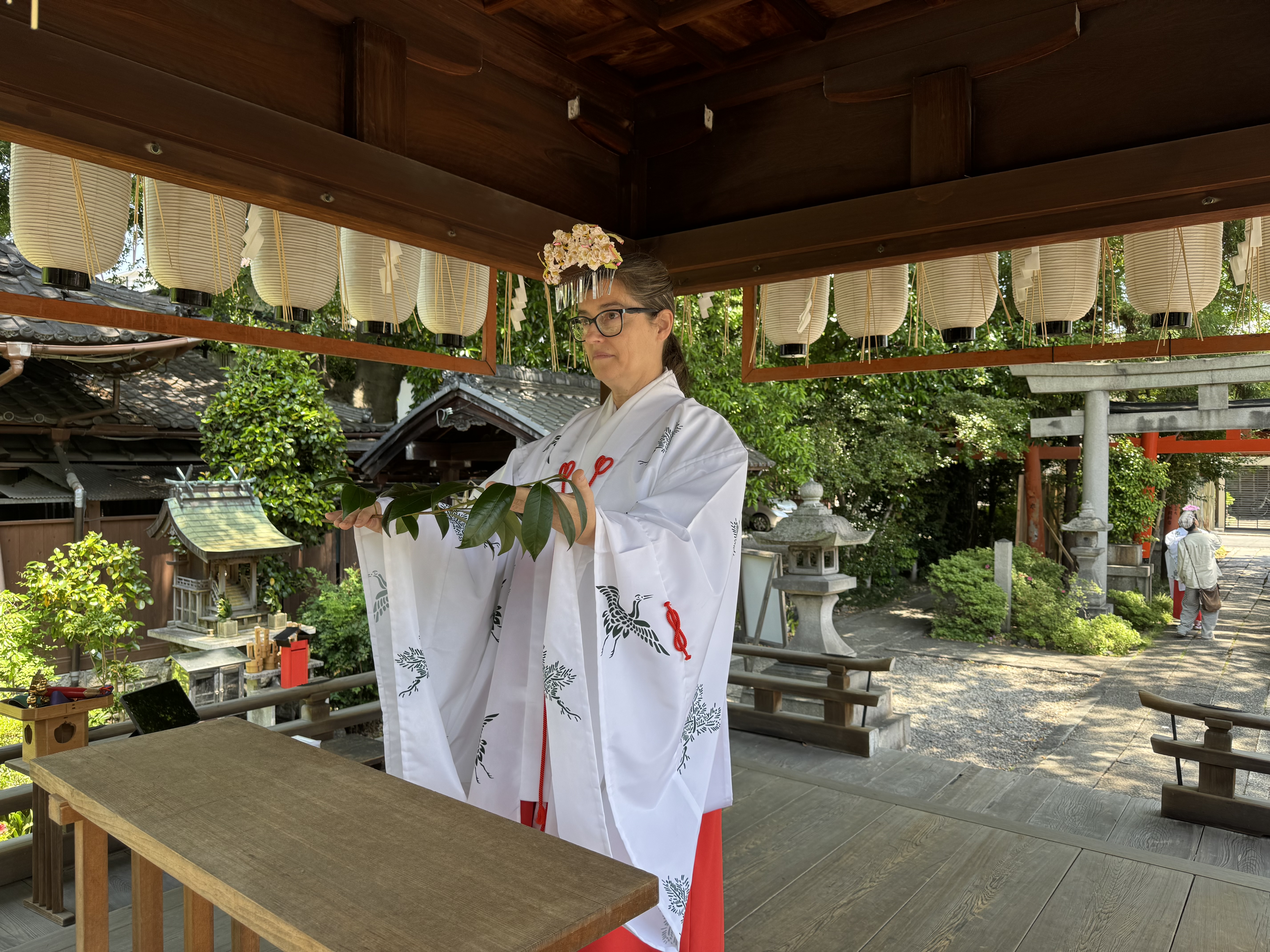
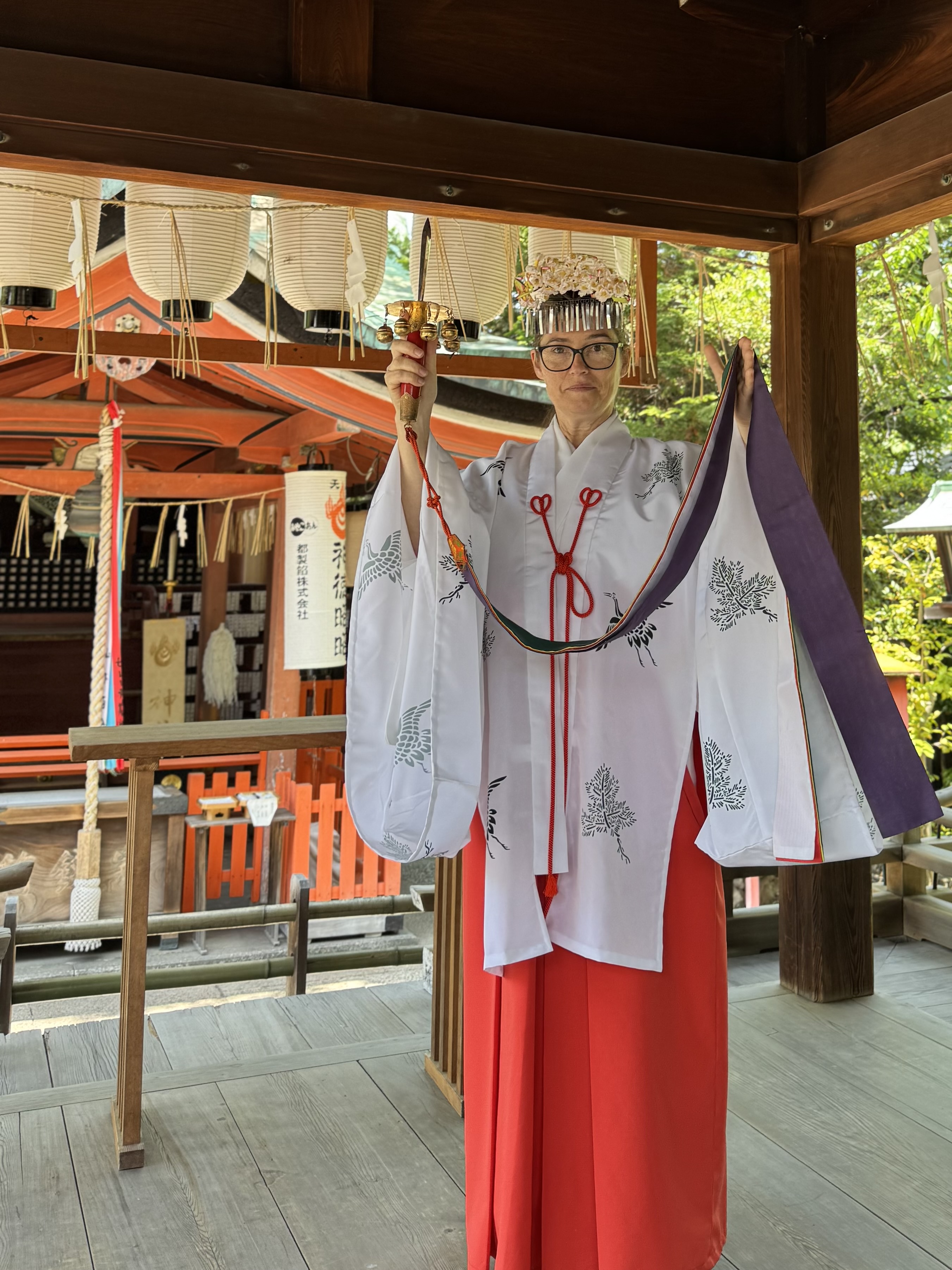
One of my characters lived a thousand years ago. She’s a miko, a Japanese shinto shrine maiden. She has powers of divination and is a spiritual medium. When I started researching her, I realised she was going to be difficult to write. Trying to put myself in her shoes was tough. Then, I found a shrine maiden experience in Kyoto, where you can dress as a miko (shrine maidens) and learn the purification and blessing rituals at a local shrine.
In May, I went back to Kyoto, my favourite home away from home. I had several reasons for doing so, but my shrine maiden experience was the transformative ‘epiphany’ moment of the trip as far as my writing is concerned.
I found the experience on a secondary tourist booking site, but contacted the shrine directly, as I wanted to ask some questions. The miko at Takenobu Inari Jinja is a polyglot, speaking Japanese, Mandarin, and English. She responded to my emailed questions and was so fluent, I felt comfortable to ask if someone at the shrine would be able to assist me with understanding the historical significance and role of miko . She wrote back offering an hour, after the main teaching, to speak with the head priest. She would translate. I was overwhelmed and extremely excited.
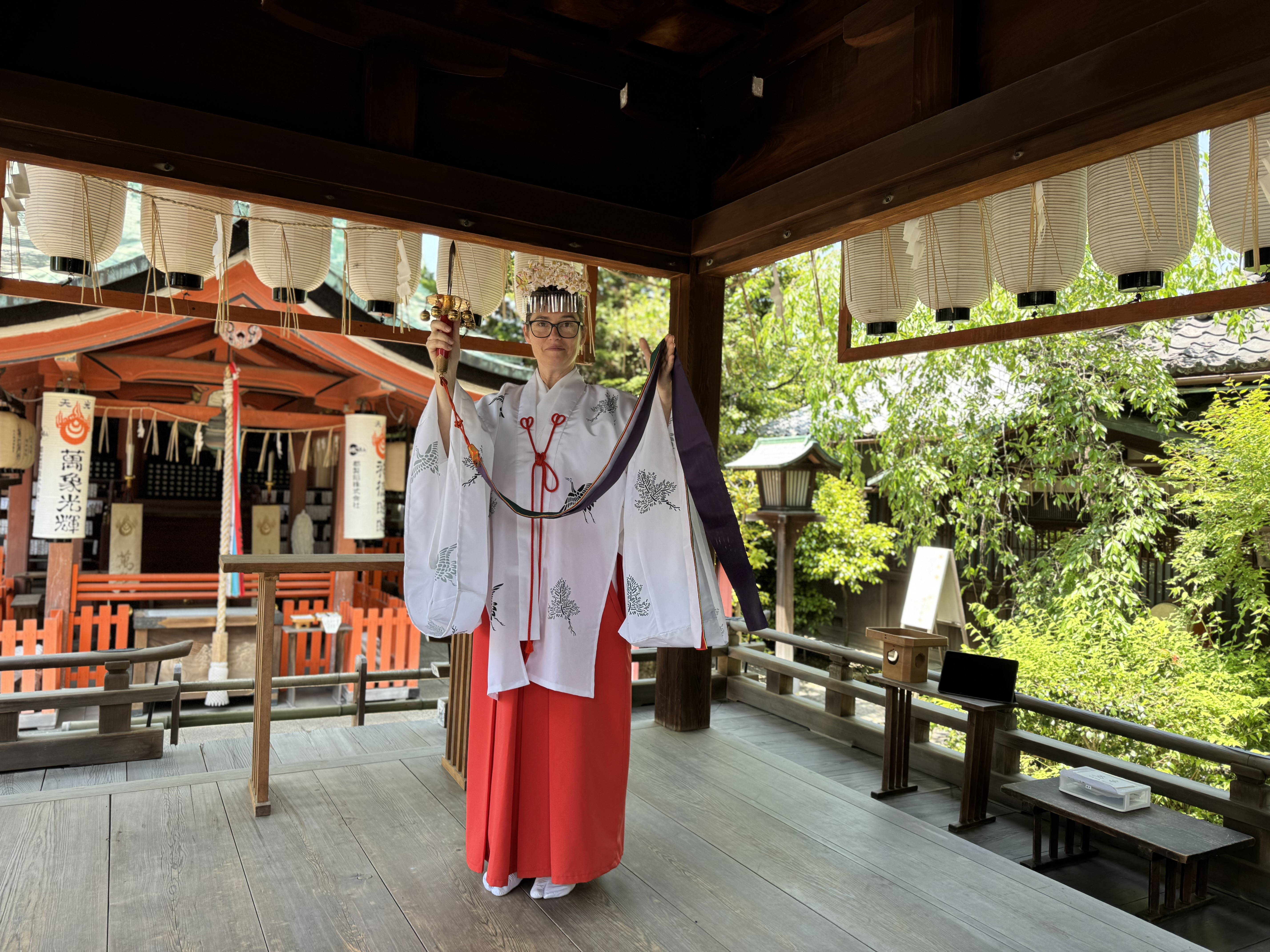
Shinto shrines are simple and beautiful. Takenobu Inari is small, but historically significant. Founded in 859 by the Fujiwara family, it is considered an auspicious place to pray when naming a baby. I arrived early and wandered around the buildings. A magnificent 800 year old tree stood by the main worship hall, and a kaguraden, a raised covered platform for performing sacred dances, stood opposite the hall. There were the obligatory water fountain, or ablution pavilion, for purification of hands and mouth, and an office, where amulets and other charms are sold. I was met by the miko at the office and we walked to another building, to get changed and begin instruction on shinto practices.
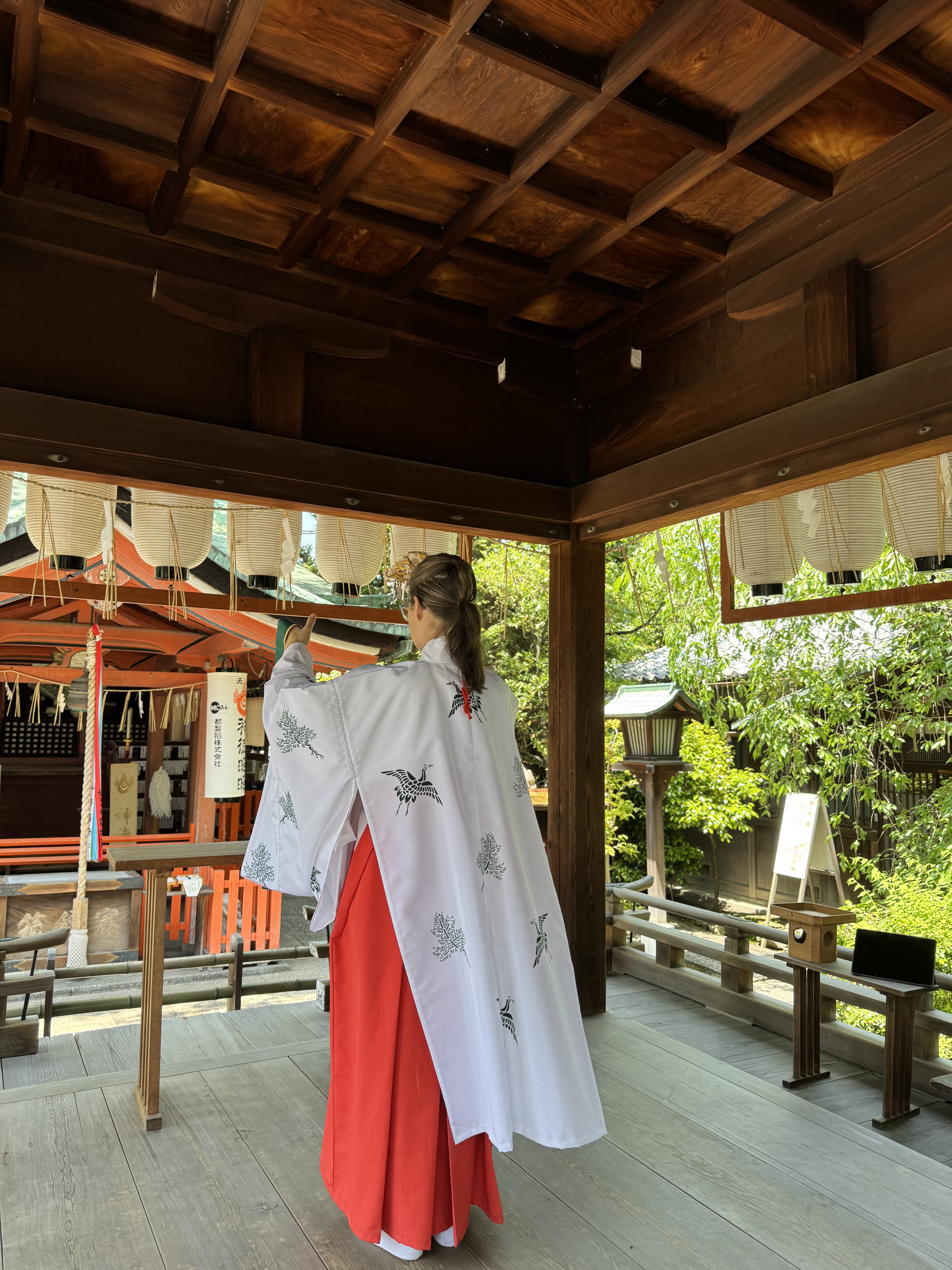
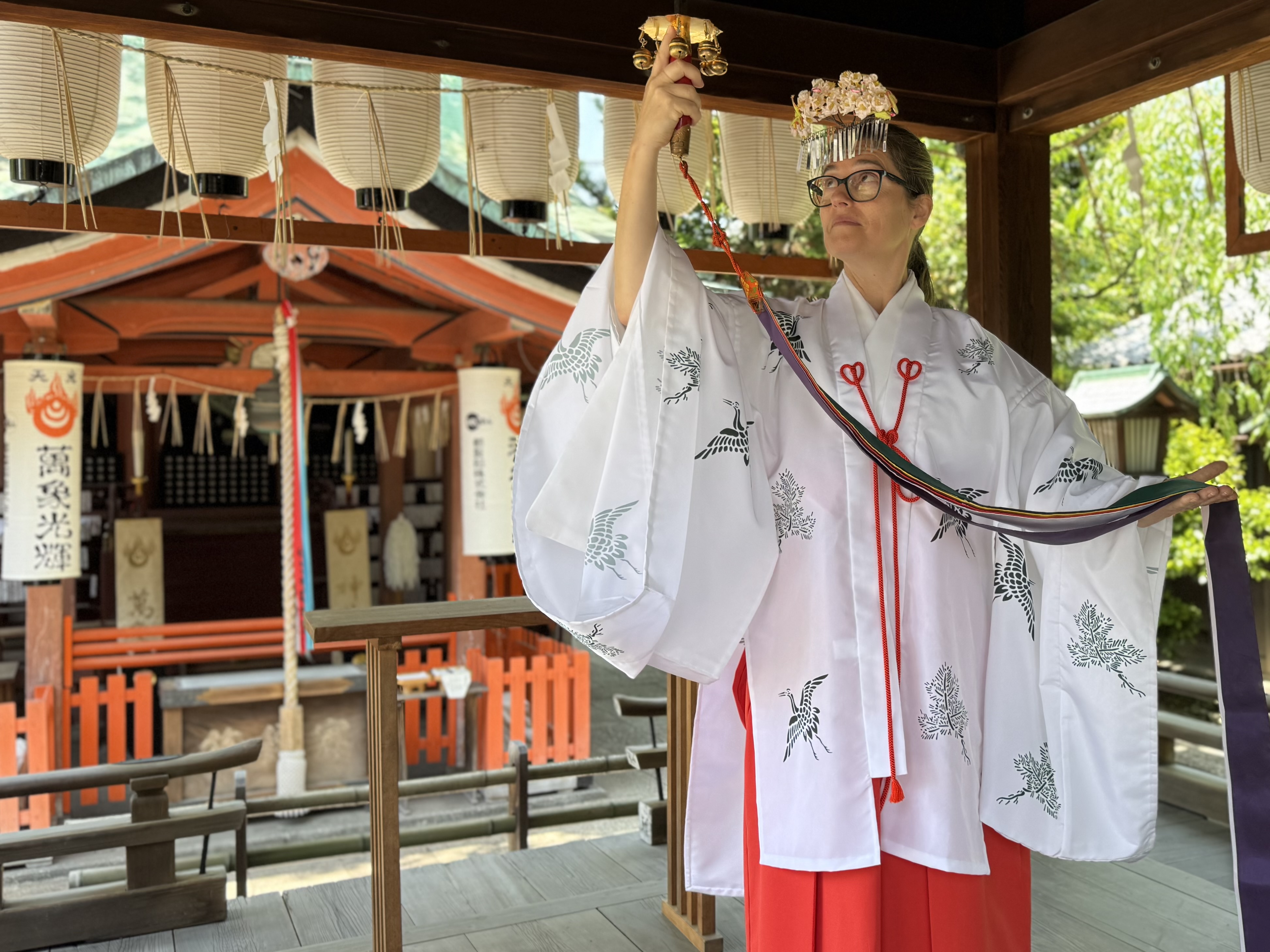
I learned about sacred objects, purification rites, offering blessings, and sacred dances. We then transitioned to the covered platform to learn the correct ritual for offering a blessing in the inner shrine. The placement of hands and feet, and observance of the solemnity and formality, was exhilarating and anxiety provoking. I didn’t want to be disrespectful. We then learned a simple Kagura, a sacred dance, and again, the movements were prescribed but beautiful and imbued with significance. As a number of locals began to drift into the space, we were informed that we were going to be performing the blessing ritual with the head priest. In front of all of these parishioners.Yikes!
I didn’t mess up any of the procedure and hopefully my efforts were looked upon kindly by the locals and kami. Calling kami ‘gods’ is a little misleading, as Shinto is animistic and kami are divine beings, manifestations of nature, and guardian entities for particular places. They can also be mischievous spirits or ancestors or humans who have achieved great deeds.
After the blessing ritual, I sat with the head priest and the miko and they explained many aspects of Shinto to me, and answered all my questions. It was revelatory to finally understand various facets of Shinto, which I had observed and experienced, but never fully understood. My favourite thing they explained was the interaction between the kami and the people during a festival or a ceremony. Shinto has many festivals and rituals, and it is believed the kami watch the proceedings from the perspective of the shrine, with the priests, miko, and people facing them. The people watch from behind the priests and miko. In this moment the kami and the people are sharing the same time and place and are drawn together to appreciate the beauty of the ritualistic rites and performances.
I have returned from Japan feeling well equipped to write my character. I have walked in her shoes, or her zori sandals and tabi socks. Being able to have this kind of experience in Kyoto allowed me to actively participate in Japan’s tangible history. I’m so grateful to have this understanding.

 Kylie Eklund-Denman