If someone had told me it would take two years to get my book to a point I could send it to an editor for a manuscript assessment at the beginning of last year, I would have laughed. I haven’t gone back to check, but I’m sure I made some outrageous predictions about finishing in six months. I’m sure I finished my first draft last year. Now, as we edge closer to the end of another year , I’m finally out of the editing cave. Editing is such an arduous, but necessary process. Reading, rereading, rewriting, getting feedback, rewriting, again and again. Writing a book is a marathon.
I sent my manuscript to my editor and friend, Jules, almost two weeks ago. Now, I’m waiting, with anxiety and trepidation, for the assessment and feedback. It’s a nerve-wracking wait, but, it means a few weeks of freedom from that project.
With the countdown ticking towards my impending trip to Japan, only 17 days until we leave, I’m preparing for what I’ll be working on over there for a month. Three of the four weeks will be in Kyoto, my spiritual home. It’s the perfect time to start a new project. I know the other manuscript will need another redraft when I get it back, but it’s refreshing to start something new.
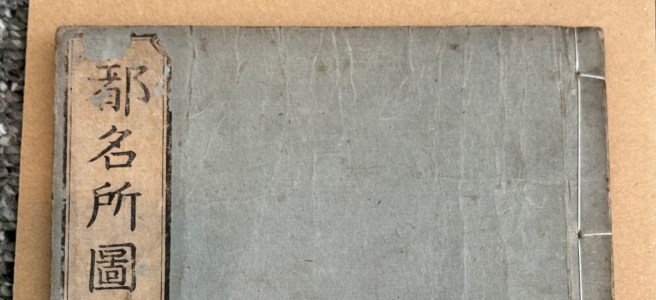
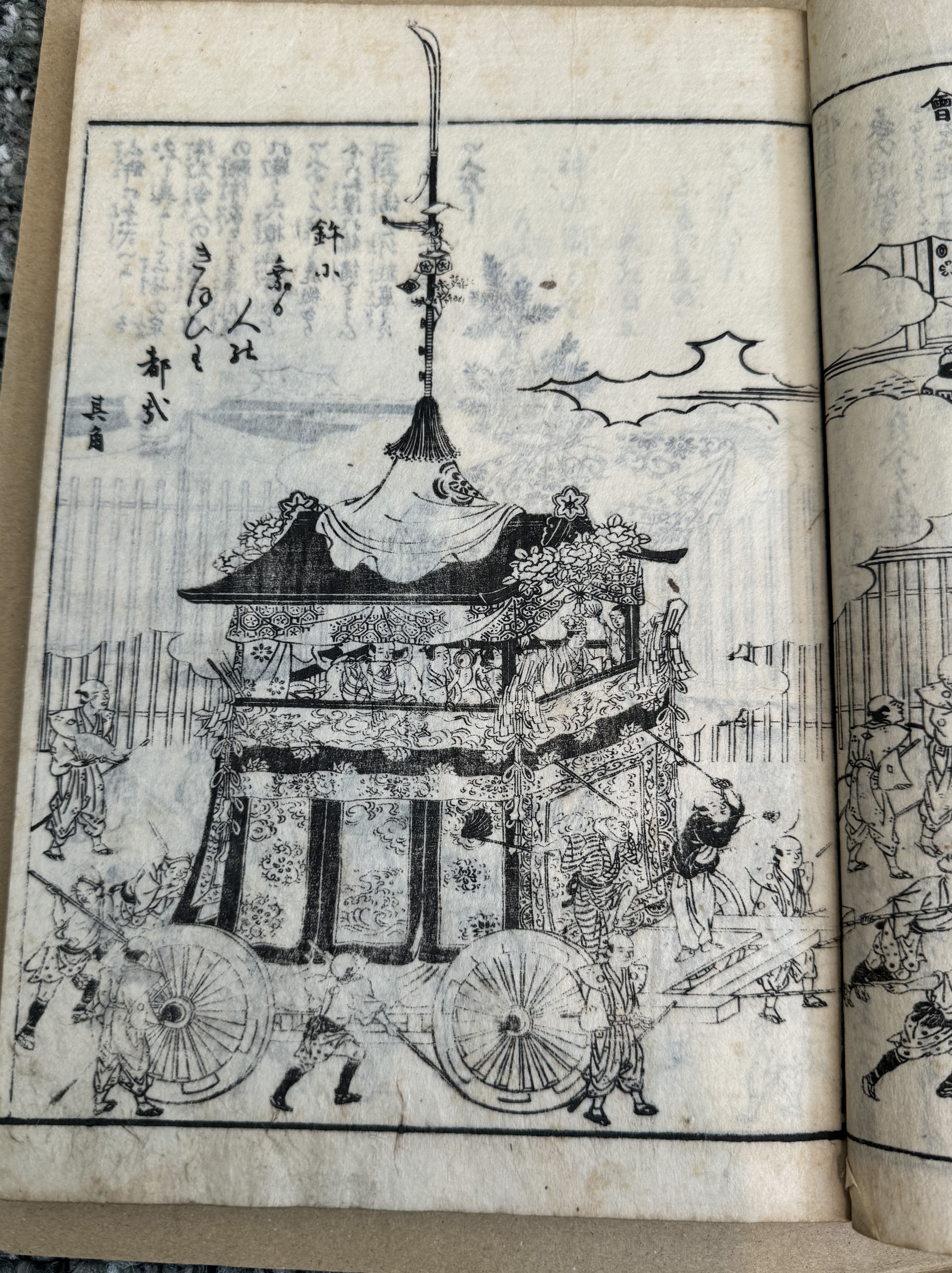
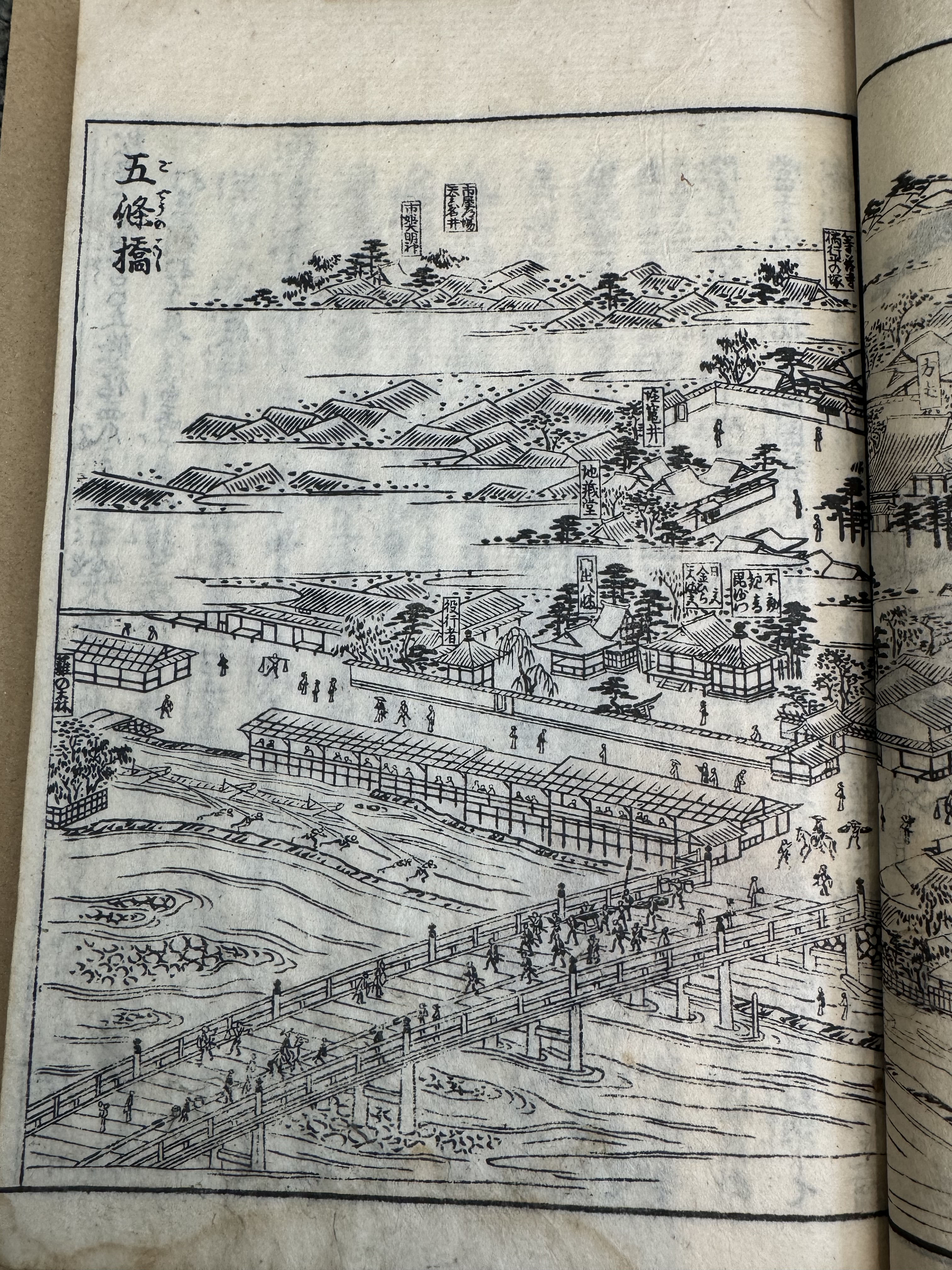
What is the new project? At the moment, it’s a slowly coalescing collection of thought bubbles. I’m researching a book, volume two of the Miyako Meisho Zue, The Illustrated Guide to Famous Places in the Imperial Capital. I have an original copy, wood-block printed in 1780, and gifted to me by Super Sake Boy. It’s a beautiful and fragile piece of history sitting in my display cabinet, wrapped in light-protecting plastic, and handled with the utmost care.
The idea of these styles of book, during the Tokugawa Era in Japan (1604-1868) was to enable people to experience a historic or famous place, through illustrations, maps, Waka poetry verses, and descriptive prose. An ancient Lonely Planet for armchair travel, or gayū, meaning ‘lie down and go’ or travel of the imagination. Japan’s borders were closed at the time, and although travel around Japan for everyday people was becoming more accessible, many were still unable to do so. Women, children, the elderly, and others, weren’t able to make the long journeys by road on foot, and women needed permission to travel. The Meisho Zue—illustrated guides—enabled people to virtually enjoy these places.
In 1780, many of the places featured in the Miyako Meisho Zue were already ancient. Some of them, possibly, almost a thousand years old. (Kyoto became the capital of Japan in 794AD, and remained so until 1868).
I’m completely intrigued by this idea as I’ve always thought of reading as ‘travel of the mind,’ or a form of escaping to another place. So, although I’m not sure what form this new project is going to take, I’m going to follow the guide book around Kyoto, to the famous places. As I’ll be experiencing these landmarks in situ, my gayū, or virtual travel, will be through time to 1780, when my guidebook was printed.





 Kylie Eklund-Denman